
Southern Costa Blanca
The most accessible stretch of coast, and where most is being built
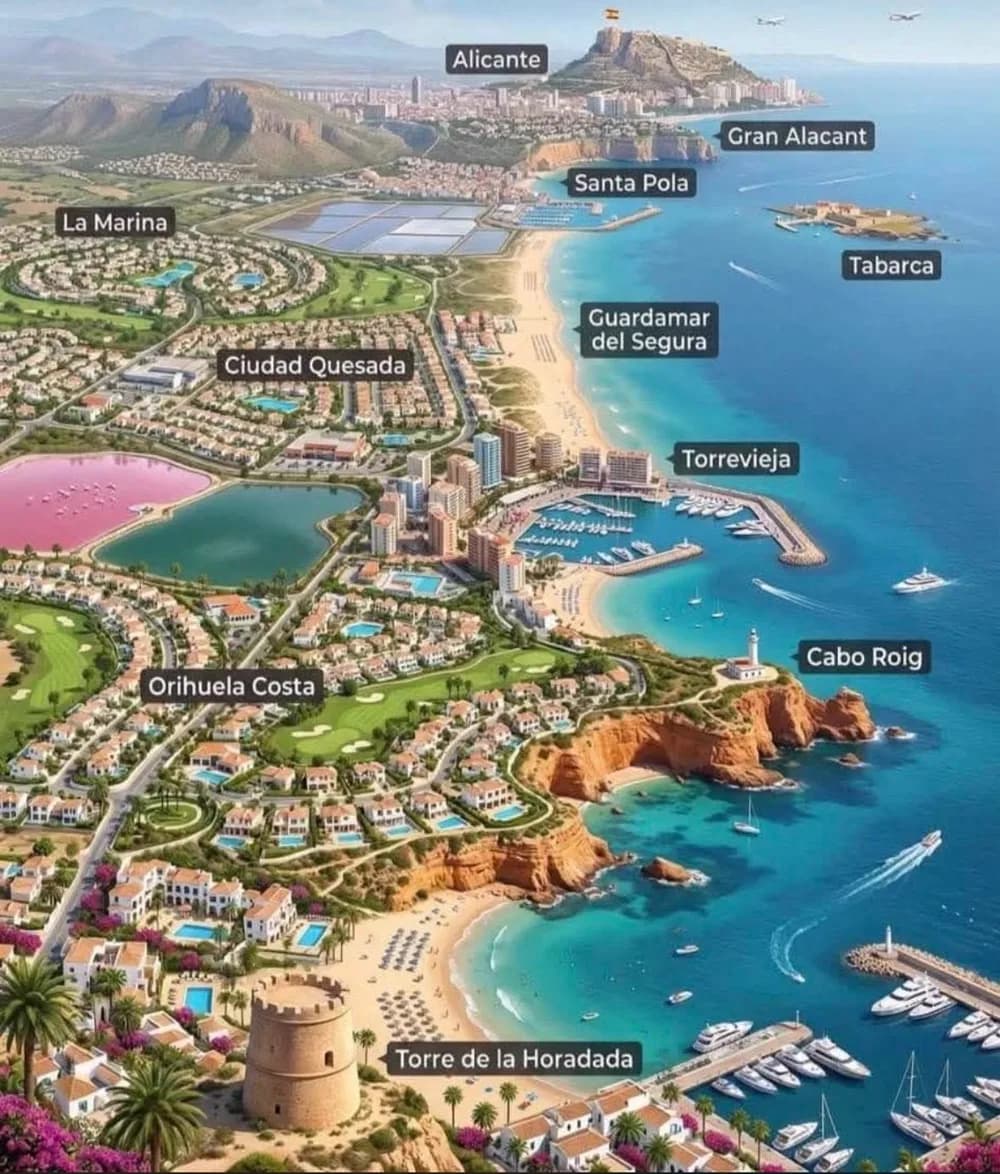
Between Alicante and Torre de la Horadada lies the densest concentration of new-build on the Spanish coast. That is no accident: the airport, the motorway and the space to build all come together here. For a Dutch buyer this is the area where a home actually gets used, rather than two weeks a year.
Costa Blanca South in numbers
320
days of sunshine a year
218 km
of coastline, beaches and coves
9
nature parks and two marine reserves
25+
hospitals, public and private
25
watersports clubs along the coast
20+
golf courses, most of them near the sea
Why this area
Alicante-Elche: daily flights from the Netherlands
Several direct flights a day from Amsterdam, Rotterdam and Eindhoven, around 2.5 hours, all year round, January included. That difference from areas served only in summer decides whether you go for a long weekend or only during the holidays.
The airport is growing with it
Alicante-Elche now handles over fifteen million passengers a year and is expanding its terminal. More capacity means more destinations and more year-round traffic, exactly the demand a rental property lives on.
Where building happens, there is choice
Most Spanish new-build projects sit along this stretch of coast. More supply means more to choose from, sharper prices, and developers who have to compete on quality and delivery dates.
A lower entry point
For the same money you buy more space here than on the Costa del Sol. That is often the difference between an apartment and a villa with its own pool, while values move with the rest of the coast.
Everything is already there
The AP-7 runs along the whole coast, there are hospitals where you can be helped in Dutch, international schools and an established Dutch and Belgian community. You are not pioneering.
Winters you spend outdoors
More than 320 days of sunshine a year and 16 to 18 degrees during the day in January. That makes the area liveable all year, which also makes it attractive to tenants outside high season.
Why the weather here differs from the rest of Spain
Behind the coast runs a mountain range from Murcia to Denia, between one and one and a half thousand metres high. Not high enough to dominate the view, but high enough to steer the weather. The basin it forms catches whatever comes in from inland and from the sea, and the result is a microclimate you no longer get a few hundred kilometres further on.
In numbers: an average of 320 days of sunshine, around 26 degrees in August and around 12 in January. October is the wettest month, and even then under seven centimetres of rain falls in the whole month. July averages eleven hours of sun a day. That is the difference between a home you use in summer and one where you also sit outside in February.
Then there is the air. The salt lakes around Torrevieja and La Mata leave the iodine content high here. Medical specialists recommend the area to people with lung and skin complaints and to those with rheumatism. For anyone living in Spain part of the year, that often turns out to be the reason the winter suits them better here than at home.
What you actually do here
A home is one thing, the years that follow are another. This is what the area consists of once the suitcases are unpacked.
Water, all year round
The Mar Menor is a salt lagoon with barely any waves and mild winters, which makes it the watersports area of this coast. Sailing, kitesurfing, diving, kayaking and paddleboarding are possible twelve months a year. Twenty-five clubs along the coast offer both single lessons and packages for families.
Golf and cycling
More than twenty courses, most of them close to the coast and several designed by well-known names. The Costa Blanca has also been a fixture for cyclists for years: quiet coastal roads for anyone wanting distance, mountain passes inland for anyone after something harder.
Cities within driving distance
Alicante with what may be the finest seafront promenade in Spain, Elche with the Palmeral on the World Heritage list, Murcia with its cathedral on the Plaza Cardenal Belluga, and Valencia with Calatrava's Ciudad de las Artes y las Ciencias. Behind its famous beaches, Benidorm has an old quarter most visitors never see.
The land of fiestas
Every village has its own festival, and there are thousands of them. Semana Santa, the Fallas of Valencia, the Moros y Cristianos and the Hogueras of Alicante. Almost all of them have religious roots, which is also where the Spanish get their many public holidays. Expect processions, floats, music and streets that suddenly look different.
With children
Terra Mítica, Mundomar, Rio Safari Elche and Aquanatura are all within an hour's drive. Beyond that there is karting, a chocolate museum in Villajoyosa, castles to explore and a boat trip to the island of Tabarca. Enough for the weeks when the beach is not quite enough.
Shopping and eating out
Shopping here happens not in a town centre but in a centro comercial: La Zenia Boulevard, Habaneras and L'Aljub, with shops, restaurants and usually a cinema under one roof. Every village also holds its own weekly market. The cooking varies by region and leans on whatever is fresh, with this coast's rice and fish dishes as the starting point.
Towns where we have projects
- Torrevieja
- Orihuela Costa
- Guardamar del Segura
- Ciudad Quesada
- Santa Pola
- Gran Alacant
- Cabo Roig
- Torre de la Horadada
- La Marina
Not sure which area suits you?
It depends on your budget, how often you want to be there and whether you plan to rent it out. One conversation is usually enough to find out.
Arrange a call